Metta is a wonderful practice and a wonderful mindstate. The act of blessing or making an aspiration for someone or ourselves is powerful. And I'd like to make a point about metta that I haven't yet written about on this blog: metta is not a practice about making things nice.
Metta as a practice is radical: it is radical in its openness; it is radical in its clarity; and it is radical in its scope. (links jump down)
When we practice metta as a formal practice daily, we bring to the practice our state of mind however it appears in that moment that we sit down and then moment after moment afterwards. Whether or not we feel open in any given moment, it is a practice of opening up. We practice dropping our agenda and conventional thoughts towards the object of metta (whomever we have chosen to be the recipient). Whether the person has slighted us or nurtured us or both, we direct our kindness and openness to them. And whether we are practicing by chanting Kwanseum Bosal, or by reciting Om Mani Peme Hung, or by repeating phrases such as "May he feel safe", etc., we direct as much kindness as we can without getting caught by thoughts about the relationship.
Dipa Ma- the great meditation master of the late 20th century was known to say on several occasions to say that metta practice and vipassana were not different. The latter refines attention and directs it at certain phenomena until it becomes perfectly clear that while the car may be turning this way and that way, there's no one at the wheel. As a correlate, the deep realization of not-self necessitates an appreciation for how a feeling of self is created from moment to moment as an attempt to use an agenda to get comfortable.
In metta practice, the order is a bit reversed. We practice dropping the agenda as we direct metta towards whomever, and as we feel resistence to doing so, our agendas become crystal clear. This is not a grueling practice, when done mindfully. Metta itself creates a feeling of mental space in which things can arise clearly. And in that clarity, all the ways we resist what is happening in the moment become very clear. This is a very different state of affairs than how someone might imagine filling the mind with love. And while blissful states of samadhi can arise from this practice, my experience of this practice is that it creates a sort of reflexive equanimity. May you be well, and you, and you, and you. No exceptions. And when that equanimity doesn't arise, it's like putting a big neon sign on whatever is causing resistance. It can be uncomfortable, but that's really the fruit of practice- to be able to give attention to what requires it. Clarity is a boon.
A scary realization can ocurr when a practitioner just begins to really give himself or herself over to the formal practice of metta. I experienced it as a child might feel when he has to apologize to someone and admit that he was wrong. In this case what was brought to the surface for me was the recognition that I have nothing to lose by others being happy. For years I thought I knew that to be true and believed it. I didn't think I was a phony. I mean, I had over the course of many years of practice gotten into the habit of wishing others well, wishing for freedom from whatever binds them. I'm not suggesting that my previous years of practice and its effects were only skin deep, so much as I realized that they were conditional. Finicky, even! Metta brought home for me again and again how I imagine myself to be unhappy if a certain other becomes happy. It's a little coo-coo, but metta's radical scope (metta for all!) exposed some faulty core beliefs.
My Tibetan teacher has said something in the same vein when he has talked about how peaceful deities and their practices are much more necessary these days than wrathful ones. Wrathful deities can bring energy, and powerful compassion, and quick decisive action. But according to him, people can get caught up in ego trips relating to intensity and peak experiences, and sensory stimulation (so much blood! so many flames!). He says that peaceful deities by contrast accomplish the same goals through a different type of intensity: the intensity of unwavering love and compassion for all beings, even for all phenomena, and not as a trip but as simply an essential quality of their own being. The unwavering aspect can be quite daunting as can be the bit about no exceptions. Really thwarts the attempts at wiggling away.
I've never really thought about metta in the spirit of Zen before today. What I mean by metta in the spirit of Zen is the practice of metta without even a goal or agenda for the practice. Practicing metta simply as an expression of who we are in each moment of practice. In this way, all the yanas are united. A Theravadan practice takes on the Zen spirit of no path, no goal, no gain and arrives at what might be conceived of in tantric terms as a sort of purity or dignity. These latter descriptors are without reference and not opposed to impure or undignified, and yet they point to an energetic state being able to relax into the state of things being just as they are.
So my advice is to please practice metta with as much kindness and clarity as you can.
Wednesday, June 20, 2012

Monday, June 18, 2012
Anathapindikovada Sutta
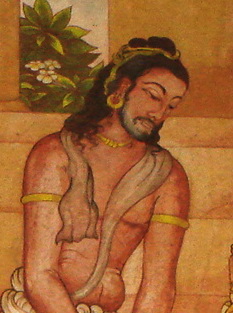
It's pretty incredible as a bridge between schools of Buddhism both 1) in its essential message and method that it could be said to share with the Heart Sutra, and 2) the end of the narrative (see links) wherein Anathapindika uses his dying words to suggest that there are lay followers who should hear the highest teachings because they can actualize them even without becoming monastics.
Here are some highlights (abridged by me, translation by Thanissaro Bhikkhu):
Wednesday, June 13, 2012
Deep Listening II
Here's the audio from this past weekend's meeting of Queer Sangha, where Rev. Do'an and I speak about deep listening.

Enjoy!
Monday, June 11, 2012
Deep Listening
It's been too long, friend. Strange and hard and wonderful things have happened in my life since the last post. I've continued to enjoy the honeymoon period with my love, and consequently I've been working on being the best partner I can be and also thinking about what that means. I've had a bout of my recurrent illness, and I was in the hospital for a week. I've been recovering well, and I'm grateful to have health insurance and a job that gives me sick leave for this sort of thing. My birthday, and my mom's birthday, and mother's day have come and gone. And I recently learned to weave and to make simple backstrap looms.

I haven't had much contact with my Zen teacher lately due to my illness/recovery and circumstances affecting our schedules, and I miss him. He has a wonderful way of balancing the iconoclasm and freshness of Zen with Truths as they are presented in other Buddhist traditions in ways that are not in conflict. For example, I sometimes feel tension between the viewpoint of Zen schools that have stopped even talking about enlightenment or the four noble truths and teachings about liberation as they are presented in other Zen schools and lineages of Buddhism. I can eek out a point of view in which there is no conflict, but he does it with much more ease. I know there are benefits to both ways of looking at things, but easily fall into a mindset that necessitates choosing one approach or the other, whereas he sees them as not different.
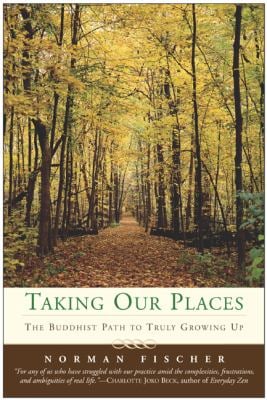
Yesterday, my Dharma brother Rev. Lawrence Do'an Grecco and I gave a Dharma talk on deep listening to the Queer Sangha for which we teach. I'm sure he'll throw a link up to the audio in the next few days, so check back. It was a wonderful thing to reflect on. I was inspired to suggest it as a topic by a chapter on listening in Norman Zoketsu Fischer's book Taking our Places; a Buddhist path to truly growing up. I highly recommend this book and Normal Fischer in general.
I'm also looking forward to meeting someone I've been interested in for some time and with whom I seem to share much in common: Barry Magid- psychoanalyst and one of the Dharma-heirs of Charlotte Joko Beck. We're going to get coffee later this week.

I've been taking this time lately to pull back from some commitments and to do some deep listening inwardly and with some nears and dears. I think this may be what this season is about for me. I will try to post more often though
Monday, March 19, 2012
Poppy in the Graveyard; Getting to know Avatamsaka teachings
I have never loved someone the way I love you
I have never seen a smile like yours
And if you grow up to be king, or clown, or pauper
I will say you are my favorite one in town
I have never held a hand so soft and sacred
When I hear you laugh, I know heaven’s key
And when I grow to be a poppy in the graveyard
I will send you all my love upon the breeze
And if the breeze won’t blow your way, I will be the sun
And if the sun won’t shine your way, I will be the rain
And if the rain won’t wash away all your aches and pains
I will find some other way to tell you you’re okay
The Avatamsaka Sutra (Chin. Hua Yen Jing, Eng. "Flower Garland Discourse")is an enormous Mahayana Sutra. One English translation wraps up at well over 1,000 pages. Though it's an Indian work, it had its hayday and largest influence in China in the 600s-800s thanks to adepts like Fazang who were able to plumb and communicate its depths. It describes a cosmology of infinite realms, each interpenetrating and containing the other.
This song by My Brightest Diamond reminded me of the way these teachings were explained to me by my Zen teacher: There is a beautiful sun in the sky. The sun evaporates water below, which forms clouds. The clouds fall as rain. The rain and sun nourishes grass. Cows eat the grass and see with the sunlight. The cows make milk. The farmer collects milk and processes it. He sells it to people who make ice cream. They sell it to a little boy. The little boy eats it on a hot day, and he smiles. His smile contains the sun and all the other factors. His smile IS the sun, and also many other things. The sun is also the little boy and his smile, and grass, and cows, etc.
I have thoughts about how this idea might enable us to live happier lives by perceiving reality in a different way, but before I write a post about it, I'd love to read your comments about what you might take from such an idea.
Monday, March 5, 2012
a Question is Posed to a Not-Still Life
(disclaimer: this post is less of a how-to than most of my others.)
One of my favorite ways to make meditation deeper is to observe the interplay of skandhas. From the early Buddhist point of view, these factors are what make up the world and a conventional self. They are divided into two: rupa (form) and nama (for the moment, let's just call this something without form).
 A Not-Still Life
Nama itself can be broken into feelings (vedana), perceptions (samjna), mental formations (samskara), and consciousness (vijnana). I could go into a much more long-winded explanation of what these things are and how they interact. I want to, but I won't right now. You can check all of these out on wikipedia or other websites. If the self is like a painting, suffice it to say that the skandhas are not like the painting that we normally perceive (a more two-dimensional quasi-cohesive sense of Self), but rather like the actual fruit and flowers the painting was modeled after. Not the still life version of "insert your name here", but a beautiful moving field of objects interacting.
I want to highlight that in Theravada tradition, there are a number of ways of benefiting from being aware of these things at play in one's field of awareness. To my way of thinking, the most important benefits are recognizing that none of these things have some sort of inherent selfhood, although they sometimes work in concert to produce a feeling or sense of Self. Seeing through that illusory sense into these compositional factors can be very liberating. One way of recognizing the not-self nature of them is to notice how they change constantly--appear, disappear, wax, wane, etc. This is one among many marvelous Theravadan techniques to reach liberation from suffering. The suffering that is bound up in a sense of self that loses and wins and hurts and gains and is shamed and gets haircuts, etc.
A Question
In Chinese Chan and Korean Seon (to a lesser extent in Japanese Zen), there exists a practice of sitting with and concentrating on a question called in Chinese Huatou (Kor. hwadu, Jp. wato) . It is like a koan, in that it produces an awakening experience and shift of perspective. Unlike a koan, it may not produce an answer that is communicated even if it does produce the enlightening experience. Zen Master Seung Sahn liked an unusual huatou that comes prefab with its own answer:
I even sometimes catch whiffs of my own arrogance when I think of other people using this huatou. At first it seemed not only anti-intellectual (which is fine by me) but actually anti-curious (which is not fine by me, or at least seems to be the most unskillful way to practice Buddhism). I mean, somebody could just mumble this all day like a mantra and not even scratch the surface of paying attention to what's in front of them. I thought of it as a way of cutting thoughts not through actual experience of cutting through to the vividness underneath, but rather as a way of swallowing somebody else's realization. "Don't know" doesn't mean anything unless you actually wonder "what this is"!
I noticed a change in my haughtiness when I simply adjusted the microscope. No longer was it a two-phrase mumble, but it was a way of sitting with the unfathomability of subjectivity. And this shift happened when I applied the question to smaller "internal" phenomena: the skandhas

What is purple? Don't know. But don't particularly care either. However, what is unpleasant (vedana)? Or eye-consciousness (vijnana)? Or aversion (nivarana)? That don't know is interesting. The experience of looking at one of those phenomena dead on and wondering what it is from a nonconceptual point of view is very, very interesting. Interesting isn't the right word. Sounds academic. I mean enlivening, freeing.
Maybe all this means is that I have judgment in the mind and I'm lacking a penchant for applying this huatou to mental formations, but at least I now have a sense for how the huatou really works. I feel very curious and energized by the application of this huatou to the ever-changing constellation of mental factors.
And if you like purple, enjoy don't know purple!
One of my favorite ways to make meditation deeper is to observe the interplay of skandhas. From the early Buddhist point of view, these factors are what make up the world and a conventional self. They are divided into two: rupa (form) and nama (for the moment, let's just call this something without form).
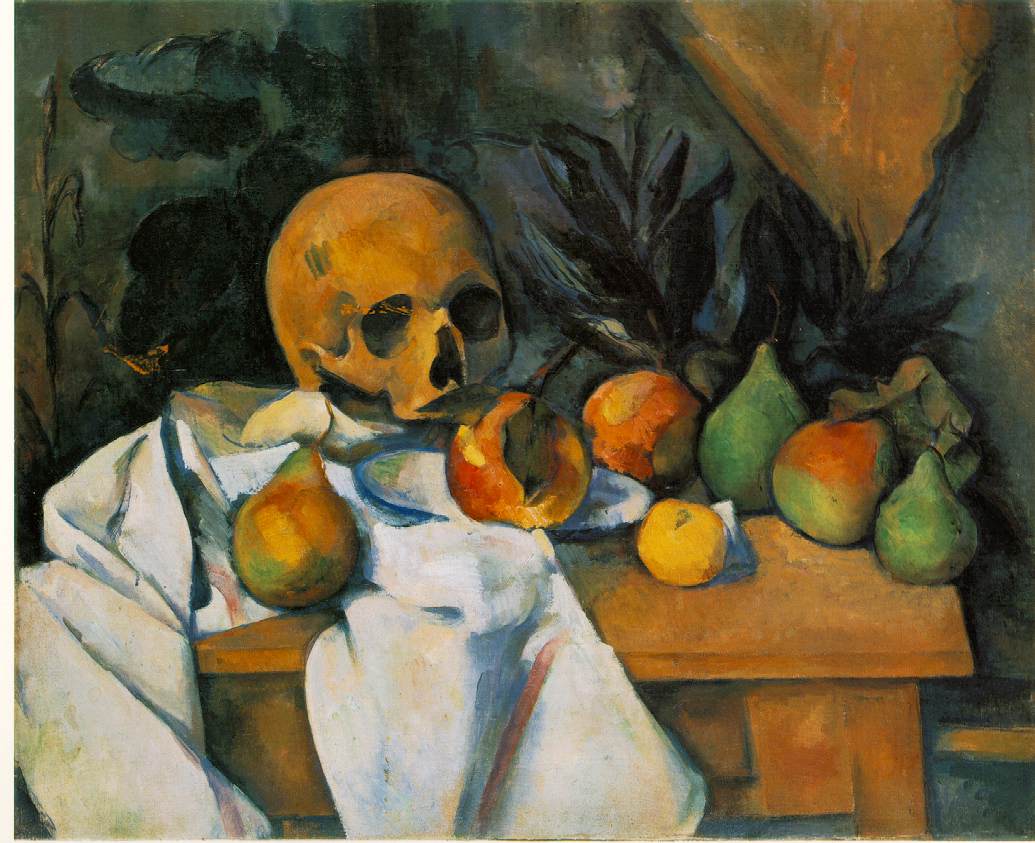 A Not-Still Life
Nama itself can be broken into feelings (vedana), perceptions (samjna), mental formations (samskara), and consciousness (vijnana). I could go into a much more long-winded explanation of what these things are and how they interact. I want to, but I won't right now. You can check all of these out on wikipedia or other websites. If the self is like a painting, suffice it to say that the skandhas are not like the painting that we normally perceive (a more two-dimensional quasi-cohesive sense of Self), but rather like the actual fruit and flowers the painting was modeled after. Not the still life version of "insert your name here", but a beautiful moving field of objects interacting.
I want to highlight that in Theravada tradition, there are a number of ways of benefiting from being aware of these things at play in one's field of awareness. To my way of thinking, the most important benefits are recognizing that none of these things have some sort of inherent selfhood, although they sometimes work in concert to produce a feeling or sense of Self. Seeing through that illusory sense into these compositional factors can be very liberating. One way of recognizing the not-self nature of them is to notice how they change constantly--appear, disappear, wax, wane, etc. This is one among many marvelous Theravadan techniques to reach liberation from suffering. The suffering that is bound up in a sense of self that loses and wins and hurts and gains and is shamed and gets haircuts, etc.
A Question
In Chinese Chan and Korean Seon (to a lesser extent in Japanese Zen), there exists a practice of sitting with and concentrating on a question called in Chinese Huatou (Kor. hwadu, Jp. wato) . It is like a koan, in that it produces an awakening experience and shift of perspective. Unlike a koan, it may not produce an answer that is communicated even if it does produce the enlightening experience. Zen Master Seung Sahn liked an unusual huatou that comes prefab with its own answer:
What is this?I have to admit, when I heard my Zen teacher or the writings of his predecessor talk about holding the Question and its answer, I thought it was pretty weak. After all, I've spent over a decade looking pretty closely at different objects of meditation. I think I've even done it in a way that isn't too heady or conceptual (okay, maybe not at first). While I'm not some great yogi, I at least trust my ability to pay close attention to what I can perceive--not just wave it all away with a thought of Don't Know.
Don't know.
I even sometimes catch whiffs of my own arrogance when I think of other people using this huatou. At first it seemed not only anti-intellectual (which is fine by me) but actually anti-curious (which is not fine by me, or at least seems to be the most unskillful way to practice Buddhism). I mean, somebody could just mumble this all day like a mantra and not even scratch the surface of paying attention to what's in front of them. I thought of it as a way of cutting thoughts not through actual experience of cutting through to the vividness underneath, but rather as a way of swallowing somebody else's realization. "Don't know" doesn't mean anything unless you actually wonder "what this is"!
I noticed a change in my haughtiness when I simply adjusted the microscope. No longer was it a two-phrase mumble, but it was a way of sitting with the unfathomability of subjectivity. And this shift happened when I applied the question to smaller "internal" phenomena: the skandhas

What is purple? Don't know. But don't particularly care either. However, what is unpleasant (vedana)? Or eye-consciousness (vijnana)? Or aversion (nivarana)? That don't know is interesting. The experience of looking at one of those phenomena dead on and wondering what it is from a nonconceptual point of view is very, very interesting. Interesting isn't the right word. Sounds academic. I mean enlivening, freeing.
Maybe all this means is that I have judgment in the mind and I'm lacking a penchant for applying this huatou to mental formations, but at least I now have a sense for how the huatou really works. I feel very curious and energized by the application of this huatou to the ever-changing constellation of mental factors.
And if you like purple, enjoy don't know purple!
Thursday, March 1, 2012
...with as much clarity and kindness as you can.
My apologies for the delay in publishing this latest post. I came down with a nasty cold, and as is typical in NYC in the Spring (Spring came early this year), I've had a never ending parade of guests from out of town. In fact, the only weekend I don't have guests in town is next weekend, when *I'll* be leaving town.
There have been a number of things on my mind lately, the above among them, that have served to disperse my concentration: a difficult client, the possibility of dating someone new, financial stress, travel plans, teaching, illness, visitors.
I want to share an approach to dealing with these types of daily life concerns that has served me enormously: formal metta practice. I hereby inaugurate my next installment of Don't Make Anything... because this practice really helps to do that.

I think the practice whose effects have been most observable for me has been formal (and I guess informal) metta meditation practice. Metta is a Pali word that means something like loving-friendliness.
The Buddha Shakyamuni explicitly taught many metta practices that are recorded in the suttas/sutras. And there are many ways of practicing. Here in the west, the most common is probably the mental repetition of metta verses. The traditional formulation contains one verse each on safety, mental happiness, physical wellness, and ease in life circumstances. One example is Sylvia Boorstein's wording:
These are repeated as a way of blessing oneself or others. In traditional practice, one devotes a block of time (one session or weeks of sessions) directing metta first to oneself. Then the practitioner moves on to friends, relatives, or benefactors who easily evoke feelings of warmth. Then neutral people--these are people we pass in the streets or people we might otherwise ignore. Then difficult people. Then all beings.
You don't have to strive to develop love and warmth while you're practicing. The phrases will get under the skin regardless. I just try to stay concentrated on the verses themselves with as much clarity and kindness as I can. Even if it's not much at a particular moment.
I practice this in an unusual way-- I only practice formally on the cushion for myself, whereas I practice off the cushion for all the other classes of beings. I started this way several years ago in order to improve my relationship with myself. Guess what? It worked. A major effect was that I developed a sort of inner voice that I didn't quite internalize when I was growing up. It's okay. Do your best. It'll pass. You're only human. You did it! And so on. It wasn't my intention to develop these thoughts specifically; it just happened.
Another spillover effect was that my kindness towards myself extended to others without much effort. Oh, she's just like me. Look at him, he's hurting. I do that [annoying thing] too sometimes.
I rarely practice formal metta for others on the cushion. I do it on the street (may he find nourishment and be happy), on the train (may her life become peaceful), at work (may they be strong). These thoughts might superficially appear dualistic (subject-object), but the mental texture of these thoughts is very light and slippery. They don't make a storyline at all. It's like writing with your finger on the surface of water.
I also like to let my mind wander as I'm going to sleep and direct metta to whomever comes to mind. It's very de-stressing, and I feel intimate with others in a way that feels very light.
When I'm afflicted by the circumstances I mentioned at the beginning of the post, I try to check in with myself with some metta. When I'm sick, I think: may I be well. When I'm being pulled in all directions I think: may I live with ease. I repeat them over and over but with clarity so that I'm aware of the meaning of my aspiration.

For anyone who might like inspiration in this practice, I recommend Sharon Salzberg's Loving-kindness; the Revolutionary Art of Happiness, the books and podcasts of Sylvia Boorstein or Arinna Weisman, or the wonderful biography of 20th century enlightened master Dipa Ma.
There have been a number of things on my mind lately, the above among them, that have served to disperse my concentration: a difficult client, the possibility of dating someone new, financial stress, travel plans, teaching, illness, visitors.
I want to share an approach to dealing with these types of daily life concerns that has served me enormously: formal metta practice. I hereby inaugurate my next installment of Don't Make Anything... because this practice really helps to do that.

I think the practice whose effects have been most observable for me has been formal (and I guess informal) metta meditation practice. Metta is a Pali word that means something like loving-friendliness.
The Buddha Shakyamuni explicitly taught many metta practices that are recorded in the suttas/sutras. And there are many ways of practicing. Here in the west, the most common is probably the mental repetition of metta verses. The traditional formulation contains one verse each on safety, mental happiness, physical wellness, and ease in life circumstances. One example is Sylvia Boorstein's wording:
May I feel safe.
May I feel happy.
May I feel strong.
May I live with ease.
These are repeated as a way of blessing oneself or others. In traditional practice, one devotes a block of time (one session or weeks of sessions) directing metta first to oneself. Then the practitioner moves on to friends, relatives, or benefactors who easily evoke feelings of warmth. Then neutral people--these are people we pass in the streets or people we might otherwise ignore. Then difficult people. Then all beings.
You don't have to strive to develop love and warmth while you're practicing. The phrases will get under the skin regardless. I just try to stay concentrated on the verses themselves with as much clarity and kindness as I can. Even if it's not much at a particular moment.
I practice this in an unusual way-- I only practice formally on the cushion for myself, whereas I practice off the cushion for all the other classes of beings. I started this way several years ago in order to improve my relationship with myself. Guess what? It worked. A major effect was that I developed a sort of inner voice that I didn't quite internalize when I was growing up. It's okay. Do your best. It'll pass. You're only human. You did it! And so on. It wasn't my intention to develop these thoughts specifically; it just happened.
Another spillover effect was that my kindness towards myself extended to others without much effort. Oh, she's just like me. Look at him, he's hurting. I do that [annoying thing] too sometimes.
I rarely practice formal metta for others on the cushion. I do it on the street (may he find nourishment and be happy), on the train (may her life become peaceful), at work (may they be strong). These thoughts might superficially appear dualistic (subject-object), but the mental texture of these thoughts is very light and slippery. They don't make a storyline at all. It's like writing with your finger on the surface of water.
I also like to let my mind wander as I'm going to sleep and direct metta to whomever comes to mind. It's very de-stressing, and I feel intimate with others in a way that feels very light.
When I'm afflicted by the circumstances I mentioned at the beginning of the post, I try to check in with myself with some metta. When I'm sick, I think: may I be well. When I'm being pulled in all directions I think: may I live with ease. I repeat them over and over but with clarity so that I'm aware of the meaning of my aspiration.

For anyone who might like inspiration in this practice, I recommend Sharon Salzberg's Loving-kindness; the Revolutionary Art of Happiness, the books and podcasts of Sylvia Boorstein or Arinna Weisman, or the wonderful biography of 20th century enlightened master Dipa Ma.
Subscribe to:
Posts (Atom)