Metta is a wonderful practice and a wonderful mindstate. The act of blessing or making an aspiration for someone or ourselves is powerful. And I'd like to make a point about metta that I haven't yet written about on this blog: metta is not a practice about making things nice.
Metta as a practice is radical: it is radical in its openness; it is radical in its clarity; and it is radical in its scope. (links jump down)
When we practice metta as a formal practice daily, we bring to the practice our state of mind however it appears in that moment that we sit down and then moment after moment afterwards. Whether or not we feel open in any given moment, it is a practice of opening up. We practice dropping our agenda and conventional thoughts towards the object of metta (whomever we have chosen to be the recipient). Whether the person has slighted us or nurtured us or both, we direct our kindness and openness to them. And whether we are practicing by chanting Kwanseum Bosal, or by reciting Om Mani Peme Hung, or by repeating phrases such as "May he feel safe", etc., we direct as much kindness as we can without getting caught by thoughts about the relationship.
Dipa Ma- the great meditation master of the late 20th century was known to say on several occasions to say that metta practice and vipassana were not different. The latter refines attention and directs it at certain phenomena until it becomes perfectly clear that while the car may be turning this way and that way, there's no one at the wheel. As a correlate, the deep realization of not-self necessitates an appreciation for how a feeling of self is created from moment to moment as an attempt to use an agenda to get comfortable.
In metta practice, the order is a bit reversed. We practice dropping the agenda as we direct metta towards whomever, and as we feel resistence to doing so, our agendas become crystal clear. This is not a grueling practice, when done mindfully. Metta itself creates a feeling of mental space in which things can arise clearly. And in that clarity, all the ways we resist what is happening in the moment become very clear. This is a very different state of affairs than how someone might imagine filling the mind with love. And while blissful states of samadhi can arise from this practice, my experience of this practice is that it creates a sort of reflexive equanimity. May you be well, and you, and you, and you. No exceptions. And when that equanimity doesn't arise, it's like putting a big neon sign on whatever is causing resistance. It can be uncomfortable, but that's really the fruit of practice- to be able to give attention to what requires it. Clarity is a boon.
A scary realization can ocurr when a practitioner just begins to really give himself or herself over to the formal practice of metta. I experienced it as a child might feel when he has to apologize to someone and admit that he was wrong. In this case what was brought to the surface for me was the recognition that I have nothing to lose by others being happy. For years I thought I knew that to be true and believed it. I didn't think I was a phony. I mean, I had over the course of many years of practice gotten into the habit of wishing others well, wishing for freedom from whatever binds them. I'm not suggesting that my previous years of practice and its effects were only skin deep, so much as I realized that they were conditional. Finicky, even! Metta brought home for me again and again how I imagine myself to be unhappy if a certain other becomes happy. It's a little coo-coo, but metta's radical scope (metta for all!) exposed some faulty core beliefs.
My Tibetan teacher has said something in the same vein when he has talked about how peaceful deities and their practices are much more necessary these days than wrathful ones. Wrathful deities can bring energy, and powerful compassion, and quick decisive action. But according to him, people can get caught up in ego trips relating to intensity and peak experiences, and sensory stimulation (so much blood! so many flames!). He says that peaceful deities by contrast accomplish the same goals through a different type of intensity: the intensity of unwavering love and compassion for all beings, even for all phenomena, and not as a trip but as simply an essential quality of their own being. The unwavering aspect can be quite daunting as can be the bit about no exceptions. Really thwarts the attempts at wiggling away.
I've never really thought about metta in the spirit of Zen before today. What I mean by metta in the spirit of Zen is the practice of metta without even a goal or agenda for the practice. Practicing metta simply as an expression of who we are in each moment of practice. In this way, all the yanas are united. A Theravadan practice takes on the Zen spirit of no path, no goal, no gain and arrives at what might be conceived of in tantric terms as a sort of purity or dignity. These latter descriptors are without reference and not opposed to impure or undignified, and yet they point to an energetic state being able to relax into the state of things being just as they are.
So my advice is to please practice metta with as much kindness and clarity as you can.
Showing posts with label zen. Show all posts
Showing posts with label zen. Show all posts
Wednesday, June 20, 2012

Monday, March 5, 2012
a Question is Posed to a Not-Still Life
(disclaimer: this post is less of a how-to than most of my others.)
One of my favorite ways to make meditation deeper is to observe the interplay of skandhas. From the early Buddhist point of view, these factors are what make up the world and a conventional self. They are divided into two: rupa (form) and nama (for the moment, let's just call this something without form).
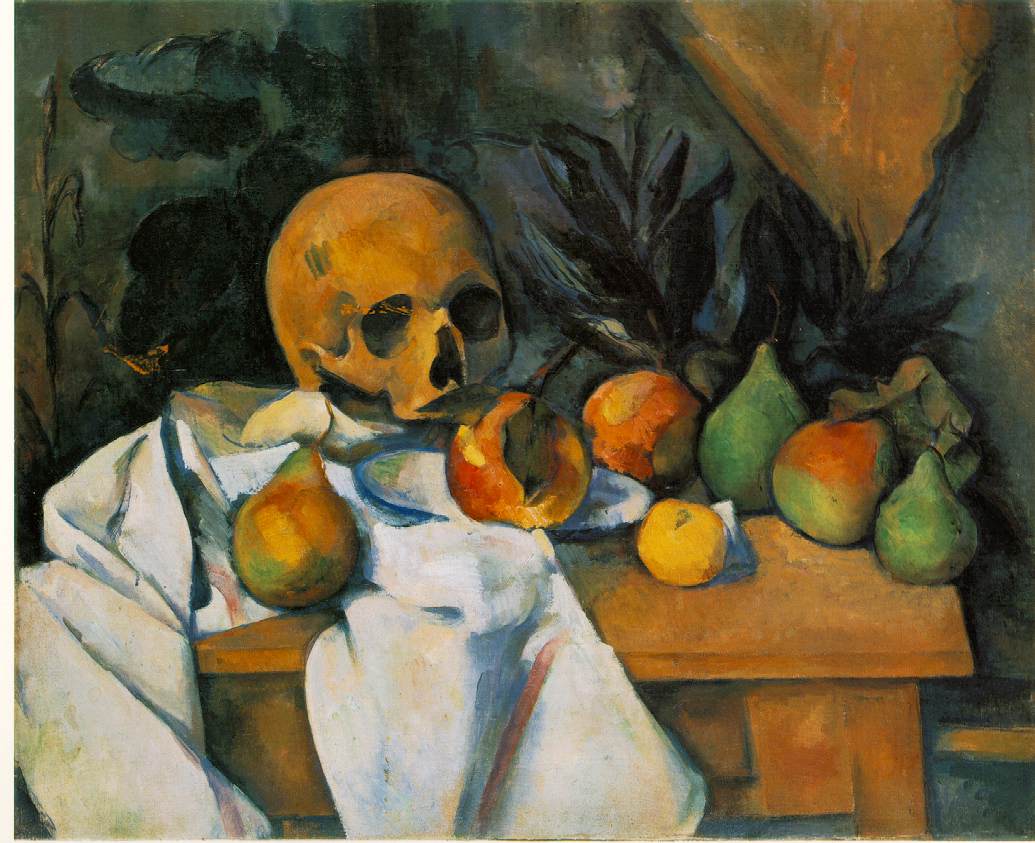 A Not-Still Life
Nama itself can be broken into feelings (vedana), perceptions (samjna), mental formations (samskara), and consciousness (vijnana). I could go into a much more long-winded explanation of what these things are and how they interact. I want to, but I won't right now. You can check all of these out on wikipedia or other websites. If the self is like a painting, suffice it to say that the skandhas are not like the painting that we normally perceive (a more two-dimensional quasi-cohesive sense of Self), but rather like the actual fruit and flowers the painting was modeled after. Not the still life version of "insert your name here", but a beautiful moving field of objects interacting.
I want to highlight that in Theravada tradition, there are a number of ways of benefiting from being aware of these things at play in one's field of awareness. To my way of thinking, the most important benefits are recognizing that none of these things have some sort of inherent selfhood, although they sometimes work in concert to produce a feeling or sense of Self. Seeing through that illusory sense into these compositional factors can be very liberating. One way of recognizing the not-self nature of them is to notice how they change constantly--appear, disappear, wax, wane, etc. This is one among many marvelous Theravadan techniques to reach liberation from suffering. The suffering that is bound up in a sense of self that loses and wins and hurts and gains and is shamed and gets haircuts, etc.
A Question
In Chinese Chan and Korean Seon (to a lesser extent in Japanese Zen), there exists a practice of sitting with and concentrating on a question called in Chinese Huatou (Kor. hwadu, Jp. wato) . It is like a koan, in that it produces an awakening experience and shift of perspective. Unlike a koan, it may not produce an answer that is communicated even if it does produce the enlightening experience. Zen Master Seung Sahn liked an unusual huatou that comes prefab with its own answer:
I even sometimes catch whiffs of my own arrogance when I think of other people using this huatou. At first it seemed not only anti-intellectual (which is fine by me) but actually anti-curious (which is not fine by me, or at least seems to be the most unskillful way to practice Buddhism). I mean, somebody could just mumble this all day like a mantra and not even scratch the surface of paying attention to what's in front of them. I thought of it as a way of cutting thoughts not through actual experience of cutting through to the vividness underneath, but rather as a way of swallowing somebody else's realization. "Don't know" doesn't mean anything unless you actually wonder "what this is"!
I noticed a change in my haughtiness when I simply adjusted the microscope. No longer was it a two-phrase mumble, but it was a way of sitting with the unfathomability of subjectivity. And this shift happened when I applied the question to smaller "internal" phenomena: the skandhas

What is purple? Don't know. But don't particularly care either. However, what is unpleasant (vedana)? Or eye-consciousness (vijnana)? Or aversion (nivarana)? That don't know is interesting. The experience of looking at one of those phenomena dead on and wondering what it is from a nonconceptual point of view is very, very interesting. Interesting isn't the right word. Sounds academic. I mean enlivening, freeing.
Maybe all this means is that I have judgment in the mind and I'm lacking a penchant for applying this huatou to mental formations, but at least I now have a sense for how the huatou really works. I feel very curious and energized by the application of this huatou to the ever-changing constellation of mental factors.
And if you like purple, enjoy don't know purple!
One of my favorite ways to make meditation deeper is to observe the interplay of skandhas. From the early Buddhist point of view, these factors are what make up the world and a conventional self. They are divided into two: rupa (form) and nama (for the moment, let's just call this something without form).
A Not-Still LifeNama itself can be broken into feelings (vedana), perceptions (samjna), mental formations (samskara), and consciousness (vijnana). I could go into a much more long-winded explanation of what these things are and how they interact. I want to, but I won't right now. You can check all of these out on wikipedia or other websites. If the self is like a painting, suffice it to say that the skandhas are not like the painting that we normally perceive (a more two-dimensional quasi-cohesive sense of Self), but rather like the actual fruit and flowers the painting was modeled after. Not the still life version of "insert your name here", but a beautiful moving field of objects interacting.
I want to highlight that in Theravada tradition, there are a number of ways of benefiting from being aware of these things at play in one's field of awareness. To my way of thinking, the most important benefits are recognizing that none of these things have some sort of inherent selfhood, although they sometimes work in concert to produce a feeling or sense of Self. Seeing through that illusory sense into these compositional factors can be very liberating. One way of recognizing the not-self nature of them is to notice how they change constantly--appear, disappear, wax, wane, etc. This is one among many marvelous Theravadan techniques to reach liberation from suffering. The suffering that is bound up in a sense of self that loses and wins and hurts and gains and is shamed and gets haircuts, etc.
A Question
In Chinese Chan and Korean Seon (to a lesser extent in Japanese Zen), there exists a practice of sitting with and concentrating on a question called in Chinese Huatou (Kor. hwadu, Jp. wato) . It is like a koan, in that it produces an awakening experience and shift of perspective. Unlike a koan, it may not produce an answer that is communicated even if it does produce the enlightening experience. Zen Master Seung Sahn liked an unusual huatou that comes prefab with its own answer:
What is this?I have to admit, when I heard my Zen teacher or the writings of his predecessor talk about holding the Question and its answer, I thought it was pretty weak. After all, I've spent over a decade looking pretty closely at different objects of meditation. I think I've even done it in a way that isn't too heady or conceptual (okay, maybe not at first). While I'm not some great yogi, I at least trust my ability to pay close attention to what I can perceive--not just wave it all away with a thought of Don't Know.
Don't know.
I even sometimes catch whiffs of my own arrogance when I think of other people using this huatou. At first it seemed not only anti-intellectual (which is fine by me) but actually anti-curious (which is not fine by me, or at least seems to be the most unskillful way to practice Buddhism). I mean, somebody could just mumble this all day like a mantra and not even scratch the surface of paying attention to what's in front of them. I thought of it as a way of cutting thoughts not through actual experience of cutting through to the vividness underneath, but rather as a way of swallowing somebody else's realization. "Don't know" doesn't mean anything unless you actually wonder "what this is"!
I noticed a change in my haughtiness when I simply adjusted the microscope. No longer was it a two-phrase mumble, but it was a way of sitting with the unfathomability of subjectivity. And this shift happened when I applied the question to smaller "internal" phenomena: the skandhas
What is purple? Don't know. But don't particularly care either. However, what is unpleasant (vedana)? Or eye-consciousness (vijnana)? Or aversion (nivarana)? That don't know is interesting. The experience of looking at one of those phenomena dead on and wondering what it is from a nonconceptual point of view is very, very interesting. Interesting isn't the right word. Sounds academic. I mean enlivening, freeing.
Maybe all this means is that I have judgment in the mind and I'm lacking a penchant for applying this huatou to mental formations, but at least I now have a sense for how the huatou really works. I feel very curious and energized by the application of this huatou to the ever-changing constellation of mental factors.
And if you like purple, enjoy don't know purple!
Subscribe to:
Posts (Atom)